One job. Every piece of paper it wrote.
The other examples each show one department. This is the other way round: one Wednesday, one truck, one job — and every document that job produced, in the order it happened. Nothing here is typed twice, and every piece of it came from the tap before it.
It starts as a quote, not a phone call
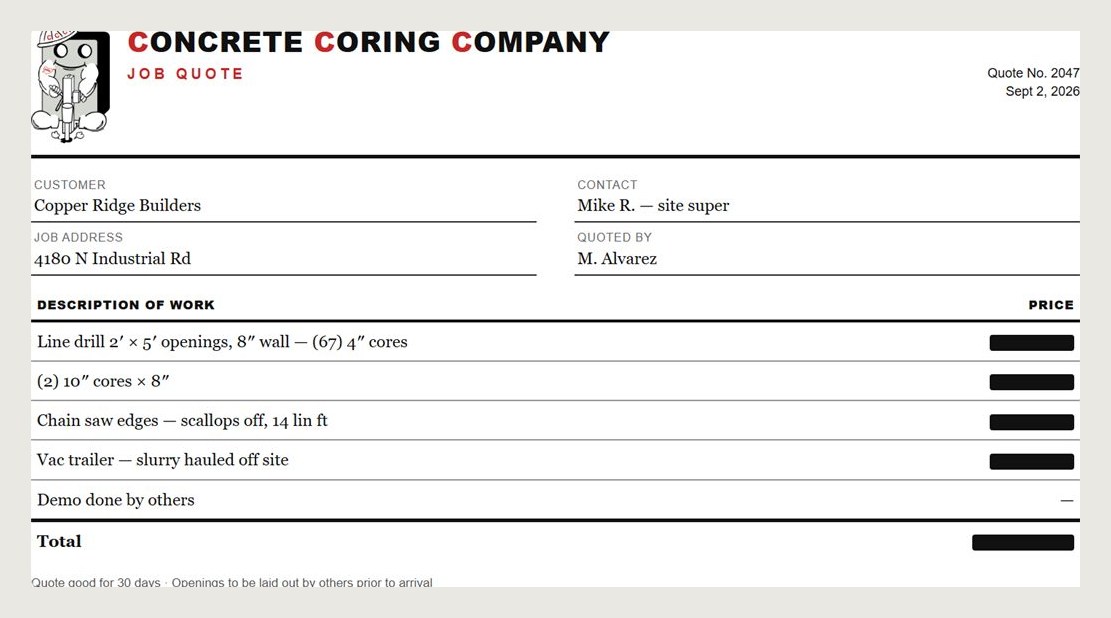
Somebody walks the job and builds the quote standing there: line drill 2′ × 5′ openings through an 8″ wall, two 10″ cores, chain saw the edges, vac trailer to haul the slurry off site. Photos, measurements and the notes he spoke into the phone ride along with it.
The office puts it on the board, and it lands on his phone
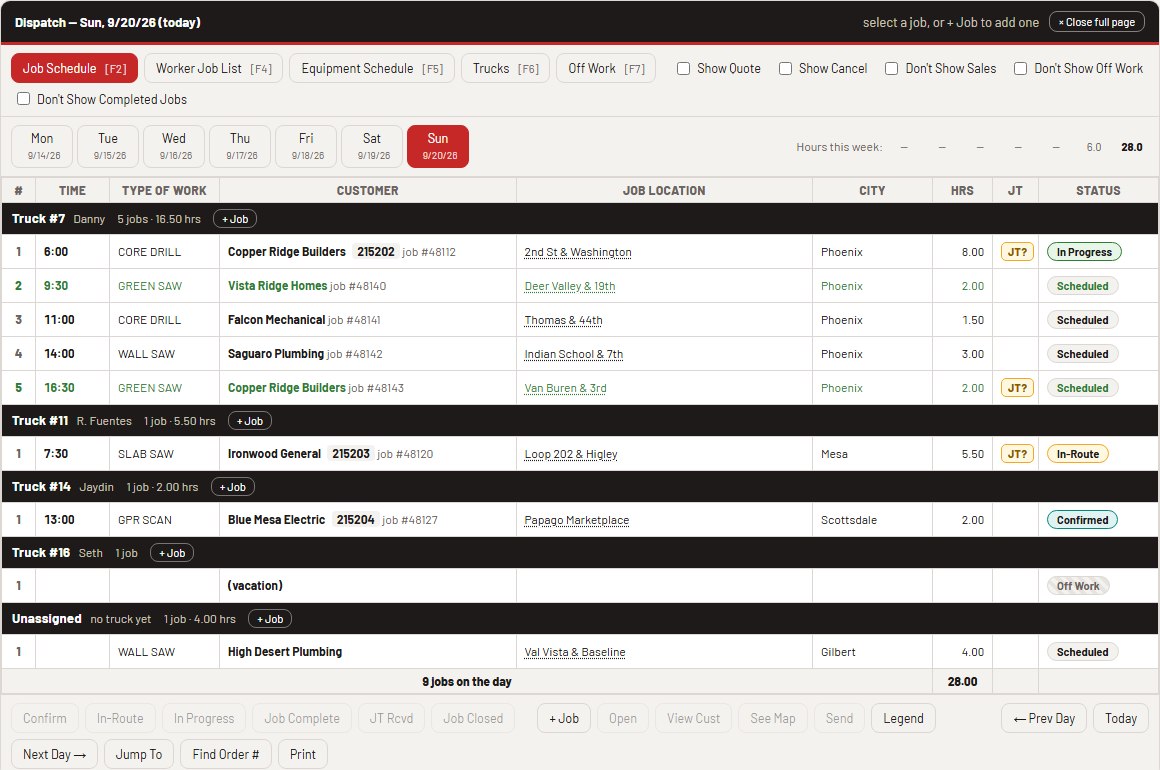
Won quote becomes job 48112 on the dispatch board — truck #7, Wednesday, first job of the day. Danny does not get a phone call at six in the morning: the address, the scope, the contact and the photos are already on his screen when he wakes up, and the board moves itself as he drives and cuts.
The day starts where the operator slept
Twenty minutes in the shop loading, then forty minutes to the job. Danny taps once for each. Nobody writes down a mileage, and nobody has to remember any of it on Tuesday night.
The travel rule, in plain words
Crews take their trucks home, so there is no yard to muster at. Saw Time pays travel the way the trade actually works: on the first leg out and the last leg home, the first hour is unpaid and everything past that hour is paid. Travel between jobs in the middle of the day is paid in full. The threshold is a setting, not something baked into the software — your rules, your build.
The fuel stop logs itself to the truck
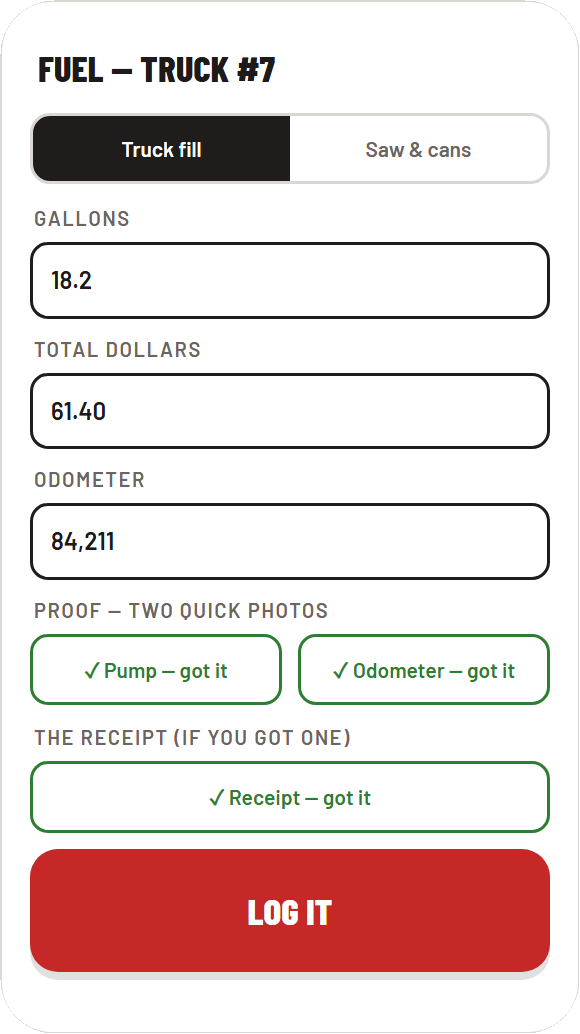
18.2 gallons, $61.40, odometer 84,211, with a photo of the pump and a photo of the odometer. It lands against truck #7, not against a shoebox of receipts. At the end of the month the fuel bill gets checked against those logs line by line, and what doesn’t match raises its hand.
The crew signs the plan before anybody starts a saw
The foreman talks the walk into his phone — line drilling 2′ × 5′ openings through an 8″ wall, other trades in the bay, cords hung, water to keep the slurry down. The pre-task plan drafts itself from his words, the crew fixes what it got wrong, and they sign it. Once signed it locks, and it files beside the ticket.

Scanned first, then drilled
Nobody puts a bit through an 8″ wall without knowing what is in it. The wall gets scanned and the clear zones marked before the first hole, so the line drill runs inside the marks and the rebar stays where it is. The scan ticket gets signed on site like any other, and if the customer wants the written report, that is built afterwards and stays editable — the signed ticket never changes.
See a scan ticket and the report that follows →The ticket the customer signs on site
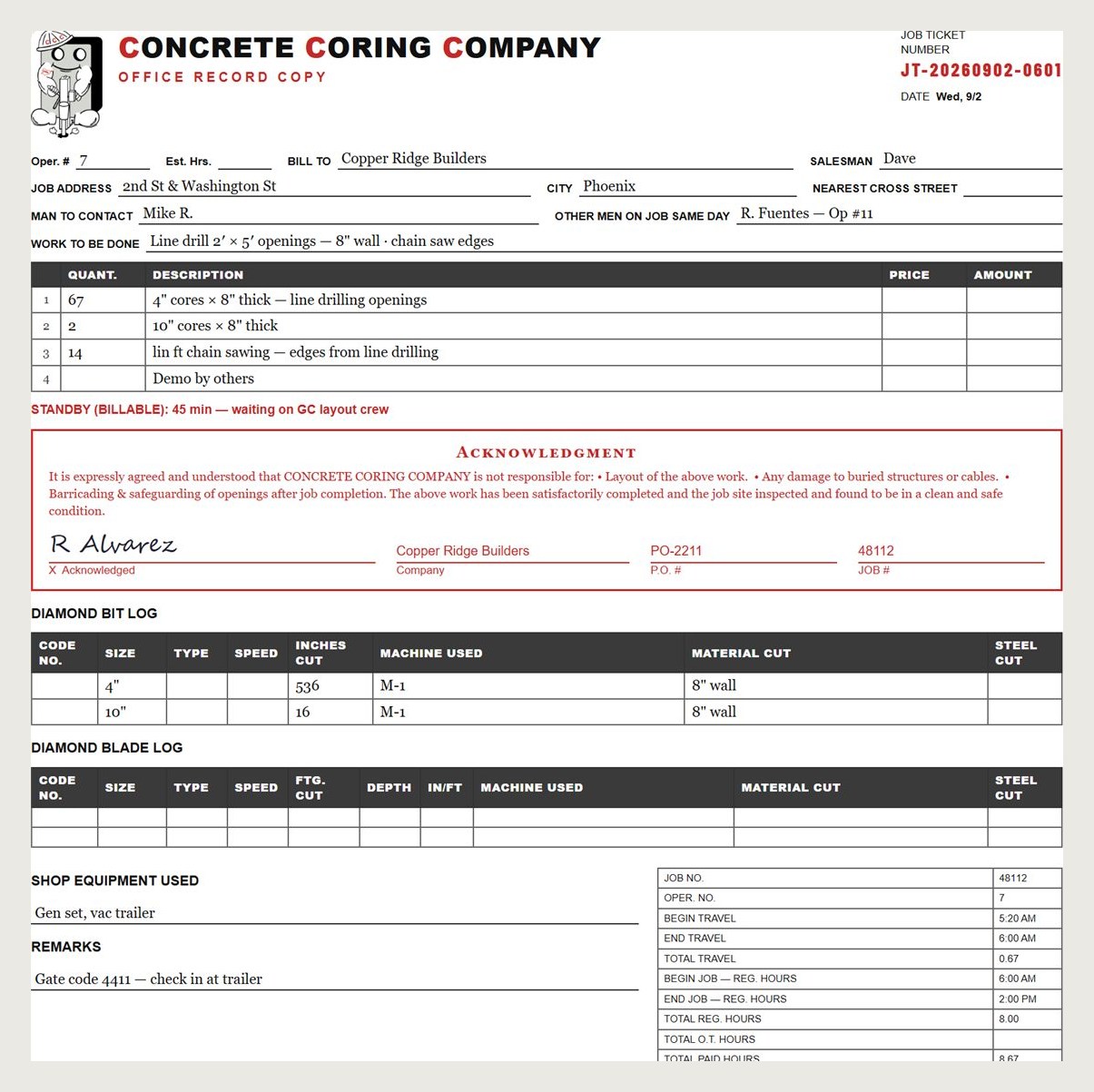
The ticket started itself when Danny punched onto the job — customer and job number carried over, nothing typed twice. He lists the work, logs the bits and blades, marks the 45 minutes of standby while the GC’s layout crew held him up, and the customer signs right on the phone. Their copy emails before he leaves the lot.
The time card was finished before anyone asked for it
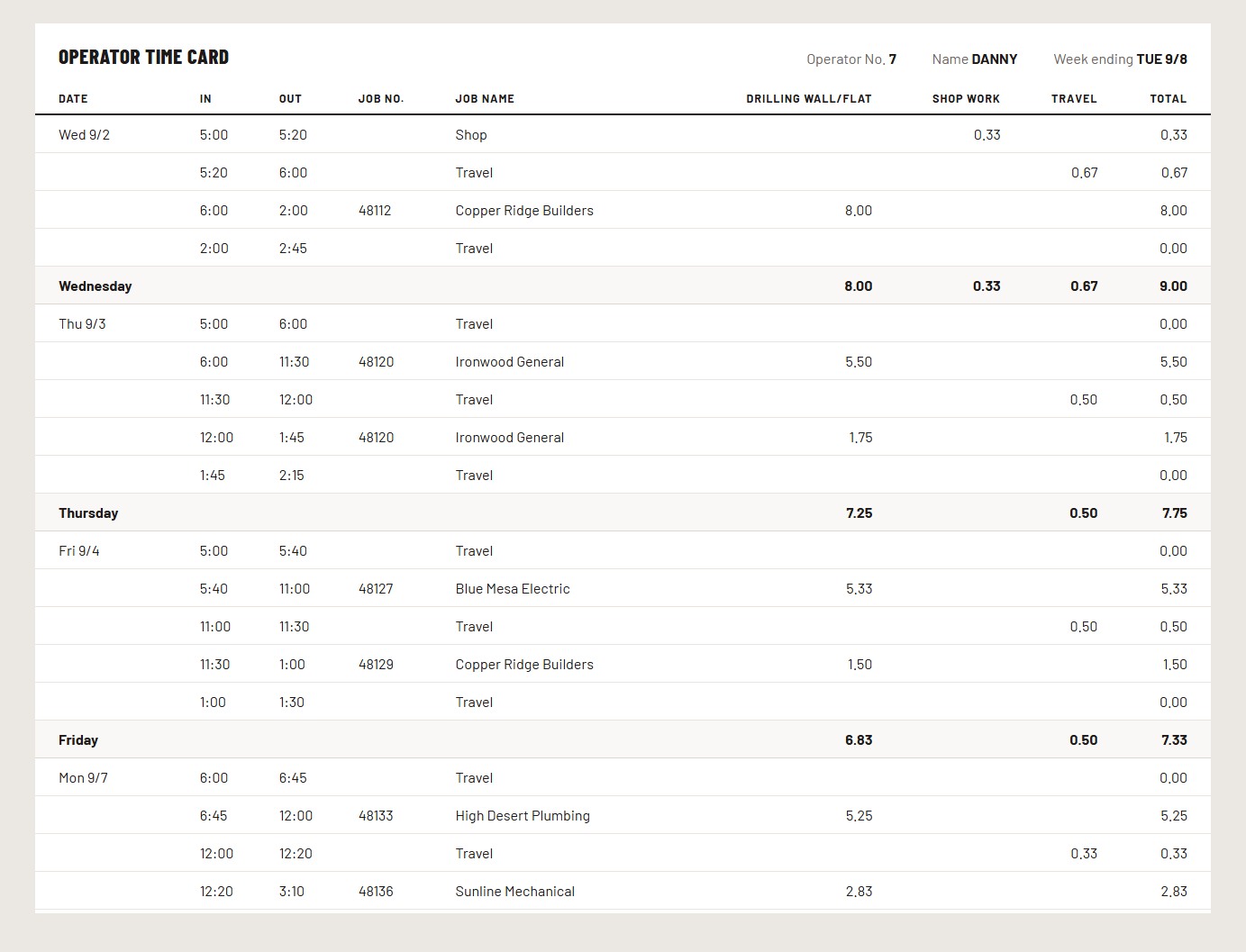
Wednesday reads shop 0.33, travel 0.67, drilling 8.00 — 9.00 for the day. Not one line of it was written on payroll morning. Every minute between the first tap and the last landed in a column, so there are no gaps for the office to chase — and the 45 minutes home sit on the card, timed and stamped, paying nothing, because that is the rule.
And the map already checked all of it
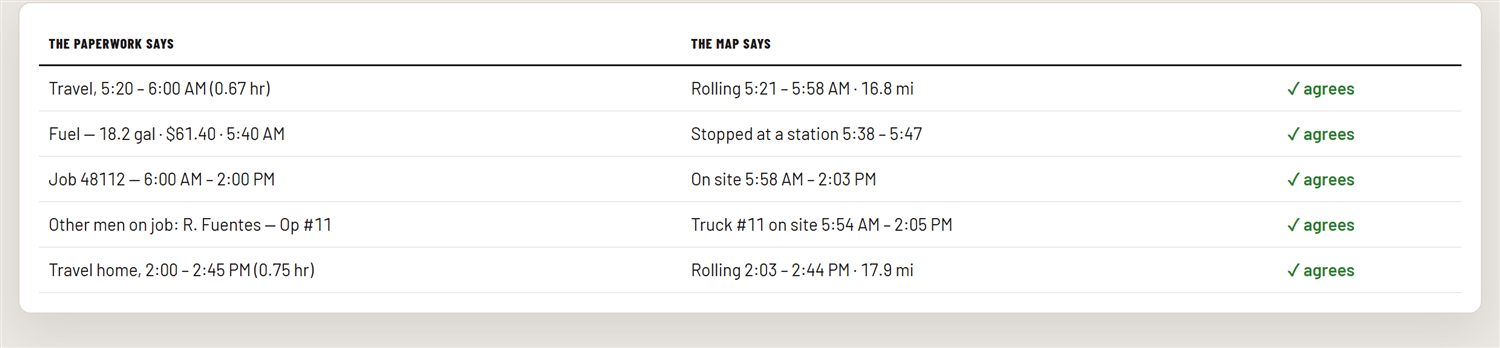
Every travel line on that card was driven by a truck the map watched. When the card and the trail disagree, the office gets a flag — not a changed number. The card is still the record, and nobody’s pay moves by itself.
One card pays the man and bills the customer
The board that sent this job out the afternoon before is running too, and the status on it changed itself while Danny drove and cut — that day is its own example. The piece still in the shop is the connector that pushes a priced ticket straight into an accounting package; today the priced work goes to whoever does your billing, with the ticket attached.